
Not making an order would give defendants “free tilt” at raising allegations
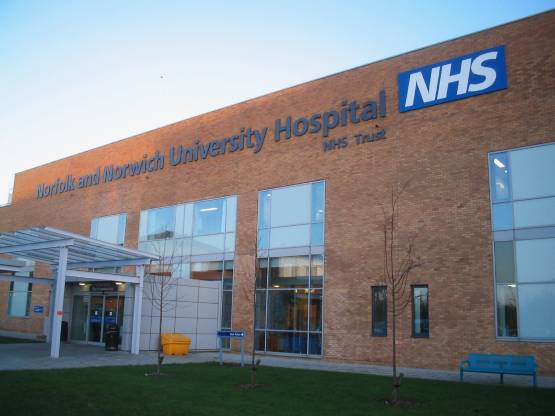
A judge has ordered two NHS hospital trusts to pay 15% of a surgeon’s costs after rejecting their argument that a surgeon, disabled by a stroke, was fundamentally dishonest.
David Pittaway KC, sitting as deputy High Court judge, said he did not consider Mohamed Atef Hakmi was dishonest while being examined by the defendants’ experts.
“I have had the advantage of observing Mr Hakmi being cross-examined for a full day. Whilst I saw that he had difficulty in answering questions, without arguing his case, I do not consider that he was trying to mislead the court in any way.
“He is a proud man against whom a serious allegation has been made which, if found proven, could have serious consequences on his registration and employment by his trust.”
Judge Pittaway said his costs order should reflect the fact that the defendants failed to establish fundamental dishonesty, and it would not undermine the costs regime.
“If anything it is the converse, not to make such an order would give a defendant a free tilt at raising the issue of fundamental dishonesty. The evidence in this case was properly explored at the trial and found increasingly wanting.”
The High Court heard in Hakmi v East and North Hertfordshire NHS Trust and another [2025] EWHC 2597 (KB) that the amount of damages had been agreed between the parties at just over £1m, subject to liability.
Judge Pittaway said Mr Hakmi was a distinguished orthopaedic surgeon who had been a consultant at the Lister Hospital, Stevenage since 2003.
His claim arose from the decision of the Norwich and Norfolk University Hospitals’ NHS Trust stroke consultant not to offer him thrombolysis to treat a stroke in November 2016, which was alleged to have caused him serious disability.
That left the question of fundamental dishonesty, which arose because of a doctor’s allegation that Mr Hakmi “had not put effort” into neuropsychological examinations and rehabilitation assessments. It was supported “less emphatically” by two other doctors.
Judge Pittaway said he did not consider that Mr Hakmi was performing badly on the first set of tests “to exaggerate deliberately” the extent of his impairment.
“If Mr Hakmi had deliberately been underperforming, it would run contrary to all that he has done to rehabilitate himself following his stroke.”
Mr Hakmi’s solicitors put the defendants on notice that, in the event that their claim of fundamental dishonesty failed, there would be an application for costs. The judge said the defendants made two ‘drop hands’ offers shortly before trial.
“In any event, the trial went ahead and the defendants pursued the issue of fundamental dishonesty until the end.”
Judge Pittaway said he raised the issue with counsel for the hospital trusts during his submissions, “who assured me that careful consideration had been given to making and maintaining the allegation right through to submissions”.
The judge said it would have been open to counsel for the defendants to have abandoned the issue after the close of evidence, or indeed earlier, “but he did not do so”.
He decided to make an order to reflect the failure to establish fundamental dishonesty, noting that there was “unfavourable national press coverage on the first day of trial” – there were many headlines reporting that the medic had been accused of deliberately failing an IQ test to boost his claim.
The consequences for Mr Hakmi, if the dishonesty allegation had been found proved, “would have been disastrous for his reputation and career”, Judge Pittaway said.
He ordered the trusts to pay 15% of Mr Hakmi’s costs in defending the fundamental dishonesty claim, from the time that the issue was raised in the defendants’ counter-schedule.
Robert Kellar KC (instructed by Slater & Gordon) for the claimant. John de Bono KC (instructed by Clyde & Co) for the defendants.
Photo: CC BY-SA 3.0, https://commons.wikimedia.org/w/index.php?curid=507801