
High Court judge “very aware” that individual claims are only worth £15,000
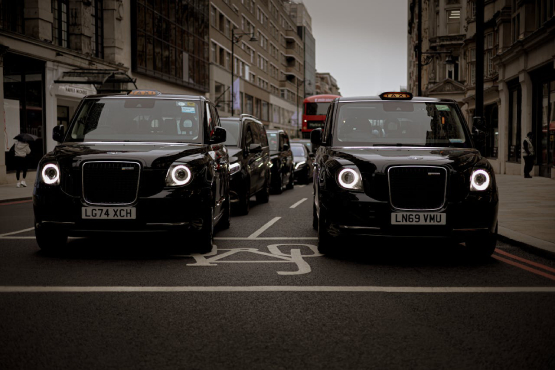
A High Court judge has ordered costs budgeting in a £340m group action brought by 13,000 black cab drivers and two taxi companies against Uber.
Mrs Justice O’Farrell said the “real advantage of cost budgeting in this case” was that the taxi drivers would have “visibility of their exposure in respect of the defendants’ costs”.
Observing that the court’s discretion to order budgeting in cases worth £10m was “wholly unfettered”, she said: “I acknowledge that ordering costs budgeting at this stage increases the burden on both sides, both in terms of the work that is required and the costs of preparing, exchanging, commenting on their costs budgets and potentially attending a costs budget hearing, although I note that that wouldn’t be necessary if the parties were able to agree their costs budgets.
“However, those burdens are outweighed by the real advantage in having visibility at this stage as to the estimates of costs in respect of the period up to the end of the preliminary issue trial that will more easily enable the court to keep an eye on and manage the costs of this litigation.”
The High Court heard in White and others v Uber London and others [2025] EWHC 2972 (Comm) that the black cab drivers’ claim against the defendants, who are all part of the Uber Group, was for damages relating to allegations of unlawful means conspiracy.
The allegation is that, in applying to Transport for London for a private hire vehicle operators’ licence, Uber misrepresented the nature of its business operating model and, on that basis, the licence should not have been granted.
As the claim forms did not include a statement that they were valued in excess of £10m, Uber applied in September for an order that costs budgeting should not apply. The taxi drivers argued that it should.
While acknowledging that being so far in excess of the £10m threshold did not give rise to a presumption one way or the other, it was “nonetheless a very relevant consideration because it can affect the court’s assessment of whether costs management is necessary in order to ensure that the costs are proportionate to the case as a whole”.
Uber estimated that its spending so far was approximately £2m, which did not indicate that “there has been any loose spending or extravagant spending in the case to date” – so there was no basis for suggesting the defendants have incurred or will likely incur disproportionate costs.
The taxi drivers did not need a costs management order “for the purposes of arranging an appropriate ATE [after-the-event] insurance policy”, having already secured litigation funding and ATE insurance to cover any adverse costs orders to the tune of £14m.
Uber argued that budgeting would add to the costs of the proceedings and divert resources that could otherwise be deployed in relation to the substance of the case, while it was difficult to assess the various contingencies.
The taxi drivers argued that costs budgeting would further the overriding objective, “in particular the requirement that the parties should be placed on an equal footing”.
They were “predominantly private individuals of modest means”, seeking payments of approximately £15,000 each.
One of the advantages of costs management was that it would “eliminate the known unknowns; it will crystallise the parties’ respective exposure to adverse costs in sums that cannot be exceeded at any subsequent detailed assessment without good reason”.
But the court was “very aware” of the fact that the individual claims were “very modest indeed”. She continued: “In those circumstances, I consider that the real advantage of cost budgeting in this case is that the claimants will then have visibility of their exposure in respect of the defendants’ costs…
“This is a case where the individual claimants are entitled to carry out their own cost-benefit analysis of the proceedings at each stage.
“That will involve, not only tracking their own costs exposure through the percentage of damages, if any, that they might have to forego, but also in tracking the funding and ATE that gets eaten up by their own costs and by exposure to the other side’s costs in terms of the wider funding for the litigation in general.”
Robert Howe KC, Benjamin Williams KC and Reanne MacKenzie (instructed by Mishcon de Reya) for the claimants. Sonia Tolaney KC and Michael Watkins (instructed by HSF Kramer) for the defendants.