
Costs would be recovered through service charge on all tenants, not just the claimants
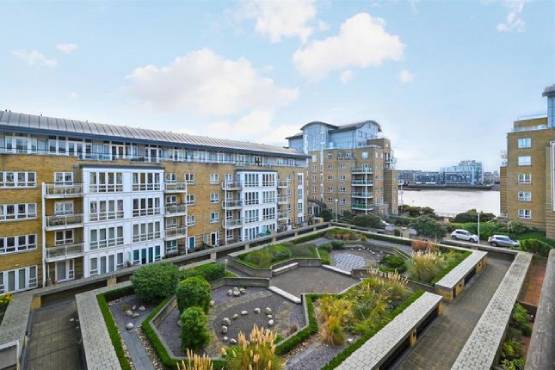
The Court of Appeal has refused to order costs capping in favour of a group of tenants in a dispute with their landlords, as a victory for the defendants would have penalised other tenants not involved in the case.
There are 70 of the 436 tenants of properties at St David’s Square in East London (pictured) bringing the claim over the reasonableness of aspects of their service charges.
In Spender & Ors v FIT Nominee Ltd & Anor (Rev1) [2025] EWCA Civ 1319, the tenants succeeded in the First-tier Tribunal, which found that only 19% of the charges demanded by the landlords were reasonable. The landlords successfully appealed to the Upper Tribunal.
The tenants argued that, without an order under rule 52.19 limiting the recoverable costs of their appeal to the Court of Appeal, it would be stifled.
Lord Justice Birss explained: “They estimate that the landlord’s costs of this appeal are likely to be about £150,000, which would put a burden on the tenants disproportionate to their interests. The overall value of the service charge in issue is about £480,000 which for an individual tenant in the litigation represents on average about £1,500.
“The tenants also point to the inequality of arms between themselves on the one hand, ordinary home owners, and the landlord companies, which are ultimate subsidiaries of NatWest bank.”
At the hearing, counsel for the landlords said the likely costs were actually £90,000, but the judge said this did not “change the problem from the tenants’ point of view”.
Birss LJ went through the case law and determined that rule 52.19 only applied to appeals in which, at first instance, costs recovery was limited or capped – this was the situation here under the Landlord and Tenant Act 1985.
It was still a matter for the court’s discretion after considering all the circumstances, including the means of both parties and the need to facilitate access to justice, the latter being a factor of substantial weight.
Also of relevance were provisions in the 1985 Act, Birss LJ said. Under section 19, only costs reasonably incurred can be charged via the service charge. Section 20C then gives the court power to prevent that recovery from taking place if it would not be just and equitable.
Birss LJ observed that, in the event there was a capping order, the landlord would be able to recover their unpaid costs as part of the service charge from all of 436 tenants. He indicated that section 20C was unlikely to apply to stop this.
“That costs risk is one which the appellant tenants, who did wish to bring this appeal, do not wish to bear. That is not a result which accords with justice or the overriding objective.
“Therefore even if this was otherwise a proper case in which to make a costs capping order of some kind, the consideration of the operation of section 19 and section 20C of the 1985 Act in this case undermines that position.”
He concluded: “Once seen in that light, I think it inevitably follows that it would not be just to make the order that is sought.”
Liam Spender representing himself and the other appellants. Tom Morris (instructed by JB Leitch) for the respondents.