
Party has “forfeited the right to any assessment based on arguments of proportionality”
The proportionality of a party’s costs is not a consideration to take into account when deciding to award indemnity costs, the High Court has held.
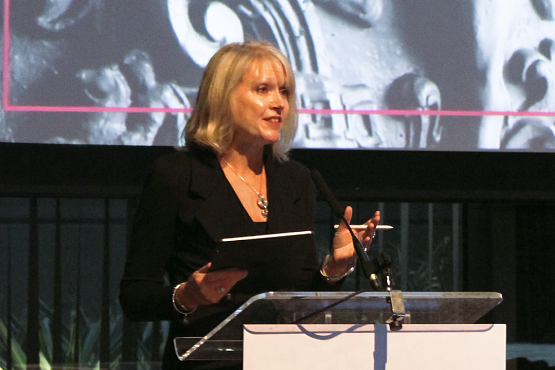
Mrs Justice Joanna Smith (pictured) said there was nothing in the authorities to suggest proportionality was a relevant factor and she saw no reason to think it should be.
In The New Lottery Company Ltd & Anor v The Gambling Commission [2026] EWHC 1311 (TCC), she was ruling on an application for indemnity costs made by the defendant Gambling Commission and two interested parties (IPs) after it successfully defended a challenge to its award of the National Lottery licence.
She observed: “This was a huge and important claim, billed by the claimants, as I recorded in my judgment, as ‘the most financially significant procurement process in UK history’. The claimants sought damages of over £1 billion together with a declaration of ineffectiveness which, if granted, would potentially have brought the National Lottery to a standstill.”
The claimants were Northern & Shell and the company it set up to bid for the licence; the IPs were Allwyn, which won it, and Camelot, the runner-up.
In arguing against indemnity costs, costs counsel for the claimants, Roger Mallalieu suggested that the defendant’s and IPs’ costs were extremely high, that there were issues arising in relation to their proportionality, and that this was a relevant consideration to take into account in the exercise of my discretion.
Smith J said: “However, I reject that submission. There is nothing in the authorities to suggest that proportionality is a relevant factor in considering whether to make an order for indemnity costs and I am inclined to think that it is not.
“If a party has conducted itself in a highly unreasonable fashion which is out of the norm so as to justify the award of indemnity costs, that party has forfeited the right to any assessment based on arguments of proportionality.
“In any event, even if I am wrong about that, I do not consider that Mr Mallalieu’s arguments on proportionality would have shifted the dial given the serious and highly unreasonable nature of the conduct in this case.
“The conduct here is such that there is no injustice in the claimants being unable to challenge the quantum of the other parties’ costs on the grounds of proportionality.”
In deciding indemnity costs were appropriate, Smith J said “one would expect such a significant and substantial claim to be advanced in a serious, responsible, and proper manner. That was not, in fact, what happened”.
She criticised the claimants’ “poor and unparticularised pleadings, their abandonment of claims, the prejudice and disruption caused by these abandonments, the extent of the unpleaded and fluctuating allegations and the weak and speculative nature of the claims”.
“The pleadings were inadequate and unparticularised from the outset, the claims were weak and none of these issues was remedied prior to trial. The pleadings gave no proper indication to the defendant and the IPs as to the case that they must meet.”
In an earlier part of the case last year, Smith J held that the court did not have the power to award security for costs in favour of an IP joined to the proceedings in that capacity.
Roger Mallalieu KC (instructed by Bryan Cave Leighton Paisner) for the claimants. Sarah Hannaford KC, Rachael O’Hagan and Barney McCay (instructed by Hogan Lovells) for the defendant. Mark Howard KC, Malcolm Birdling KC and Jamie Carpenter KC (instructed by Quinn Emanuel Urquhart & Sullivan) for the interested parties.