
Rowley: Costs judge has power to order security for costs in detailed assessment

Novel order not required, however, as interim payment would have same effect
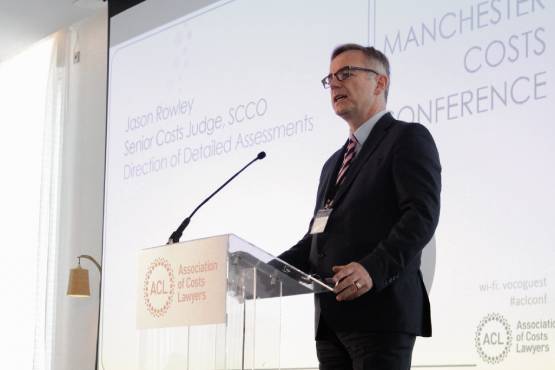
Parties can apply for security for costs in detailed assessment proceedings, the Senior Costs Judge has ruled.

However, Judge Jason Rowley said he did not need to order security in the case before him because a more conventional order for an interim payment would have the same effect.

In Bugsby Property LLC v Stewarts Law LLP [2026] EWHC 275 (SCCO), the defendant law firm represented the claimant in a claim backed by litigation funding companies Therium and Omni Bridgeway, although was late replaced by Signature Litigation.

All four were signatories to an amended priorities agreement (APA) setting out how the proceeds of the claim would be distributed.

The claim was “at least partly successful” and the proceeds amounted to £27.6m. This was insufficient to meet all of the funding costs and solicitors’ charges as envisaged in the APA. Bugsby is relying on a variation of the APA to entitle it to a share in the proceeds and a decision on the distribution is currently with independent counsel.

Without this, the claimant said, it would not able to pay the outstanding fees of £2m it owed Stewarts, Therium having already paid around £2.5m.

Stewarts argued that Bugsby would not receive anything from the proceeds and so should not be able to bring detailed assessment proceedings. Bugsby said it may and so should be allowed to challenge Stewarts’ fees in the usual way.

SCJ Rowley noted that, in the substantive proceedings, Bugsby was ordered to pay £3m in security for costs given its location in the USA and having no assets in England and Wales.

In response to the application for detailed assessment, Stewarts sought security for costs of £200,000.

SCJ Rowley said he was not aware of such an application having been made before. “The rarity may simply be because where a case falls under section 70(2) of the Solicitors Act 1974, the court is entitled to impose such conditions as it sees fit upon the assessment of the solicitor’s charges, save in respect of pre-judging the incidence of the costs of the proceedings themselves.

He rejected the submission that the court did not have jurisdiction to deal with the application on the basis that it was brought under the Solicitors Act 1974, rather than the CPR.

In my view, these claims are dealt with under the CPR right from the beginning. It is a CPR part 8 claim form that is issued and proceedings under part III of the Solicitors Act 1974 are brought in accordance with CPR part 67…

“As such, if I thought it appropriate to make an order for security for costs, then I do not have any doubt that I have the jurisdiction to do so.”

The judge went on that this was the sort of case where an order for security for costs “might be made in the same way as in the substantive proceedings”, given that Bugsby was both located abroad and without assets.

“The only reason that I do not consider that I need to make an order for security for costs is that I could achieve the same ends by the rather more common approach of making an order for an interim payment of costs in respect of the defendant. This would remove any vestige of concern regarding jurisdiction…

“It seemed clear from the submissions made that such a requirement to make an interim payment would essentially stay the proceedings until the issue of the claim proceeds distribution had been resolved.”

SCJ Rowley decided to stay the proceedings for three months and said he would extend it if the independent counsel needed longer.

“If the claimant does wish to pursue these proceedings further, then it can expect an order for an interim payment of £200,000 to be made upon resurrecting its request for an order for assessment.

“I am solely making an order for a stay at this stage so that there is no prospect of the complication of applications for unless orders for failure to pay the sum of £200,000 within a particular period coming before the court in the relatively near future.”

James Taylor (instructed by CANDEY) for the claimant. Robin Dunne (instructed by Stewarts Law) for the defendant.

Exclusive Access

Members only article

This article is exclusively for ACL members. Please log in to proceed, or click the button below to fill out an application from and become a part of our professional community.

Post details

Post type
News, Public
Published date
04 Mar 2026

Fill this form out to be notified when booking goes live.

This field is for validation purposes and should be left unchanged.
Your Full Name
This field is hidden when viewing the form