
Jason Rowley also suggested widening use of fixed costs in Court of Protection work
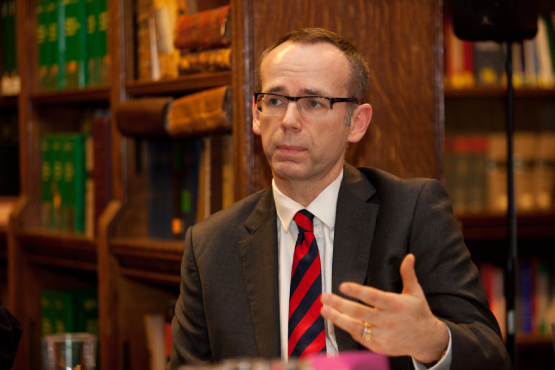
The electronic bill needs simplifying as it is encouraging parties to challenge every element, the Senior Costs Judge said last week.
Jason Rowley also suggested that more fixed recoverable costs would cut delays in Court of Protection (CoP) work.
Speaking at the Costs Law Reports conference in London, Judge Rowley argued that the electronic bill – which he likened to Marmite in its appeal – was due for a review.
“In my view e-bills tend to lend people towards challenging every last bit all the way through… The more detail you give lawyers of any stripe, the more things they find to argue about. And so we end up with more challenges, not fewer.”
They were even more difficult for litigants in person to handle, not least because they did not print out properly.
“The ones who say they like them tend to be Costs Lawyers,” the judge went on. “In my experience, it’s not entirely about the users. And I think most judges are ambivalent about them.”
He questioned why the e-bill had to be a spreadsheet. “Solicitors and barristers generally speaking don’t use them for anything else… I think for most people it’s a wall of data. It’s more difficult to see the wood for the trees.”
People were now coming to court claiming more time to prepare an e-bill than a paper bill, he added.
Judge Rowley continued: “I’m not suggesting we should go back to the Victorian account book because that confused people as well. But that seems to me there’s got to be something that is better than simply the Precedent S or even the ACL version – there is too much over-engineering. We ought to have another look seeing what we might do in its place.”
He pointed out that others have approached this differently, such as the Supreme Court and the employment tribunal. “It makes you think that if we started again, we may come out with something different.”
Earlier in the conference, retired costs judge Peter Haworth noted how the Senior Court Costs Office’s (SCCO) CoP workload was increasing – it has assessed as many bills by the end of August this year as it did in the whole of 2024.
Judge Rowley said it was not facing a backlog: “We’re just very popular.” He went on: “So we have either to recruit more people – and in this current environment, I’m not sure how likely that is – or we need to do something which involves less assessment. Not no assessment, just less assessment.
“Fixed costs is the obvious [answer]. There are fixed costs as it stands for very small things. [Widening them] would take out a lot of cases that are currently delayed.”
On fixed costs more broadly, the Senior Costs Judge said he was spending a lot of time talking to judicial colleagues about them. “They’re very happy if you go outside and tell them what the figures are when you come back in,” he advised.
Fixed costs determinations were now coming into the SCCO through the London county courts. This signs were that “not everybody’s read rule 45.64”. He explained: “You’re supposed to send in your part 8 claim form and Precedent U. And then the defendant sends in their acknowledgement of service with their Precedent U and I can make a decision and the whole thing’s done and dusted.” But this was not happening and people were instead seeking directions.
Judge Rowley said as well that there should be two new judges in the SCCO next spring and also referenced the recently published Harman review of harassment and bullying at the Bar, which talked about bad behaviour from the bench.
He stressed that lawyers could approach him confidentially if they witnessed anything like that at the SCCO.