
Neil Rose reports from this year’s Women in Costs networking conference, where the theme was transformation
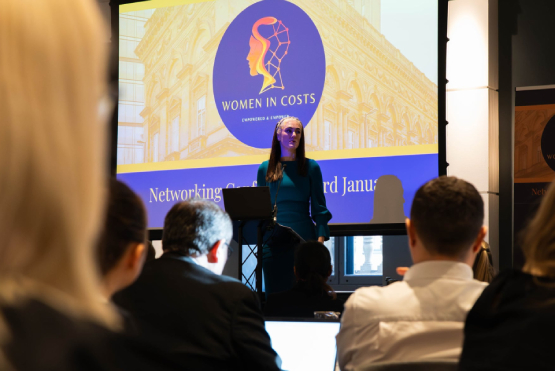
Some 174 people gathered in Manchester last Friday for the fourth Women in Costs (WiC) networking conference and to celebrate another 12 months of progress for the group. The ACL was one of the sponsors.
As ever, it was compered by Erica Bedford, who founded the group with Costs Lawyers Sharn Khaira (vice-chair) and Victoria Weinrich-Cooke (mentoring lead).
The theme of the day was transformation and Ms Bedford outlined how WiC’s mentoring programme – sponsored by Kain Knight – has transformed in the past year; what started out as a one-year programme has been extended to two years and around 50 women are now taking part.
Further, Rebecca Bidwell, who built and exited costs firm Bidwell Henderson, has become head of operations and Lisa Brunton its new finance director.
Ms Brunton does not work in the law but is Ms Bedford’s sister. The barrister joked: “She is one of the only people in this world who can tell me that I have a budget, that it’s not a target and that I need to stick to it because, trust me, you do not want to go in front of her with a Precedent T and an application to vary.”
Ms Bedford also talked about her own transformation, in moving from Kings Chambers to Hailsham Chambers, a set with “a really strong female leadership group”, headed by Nicola Rushton KC.
Ms Bedford praised the support the silk had given her. “What she did was figure out what was important to me, and then she show me an environment in which I could meet those needs and also in which I develop and grow.
“I’m not sure she realises this, but what she also did was she show me the power and the possibility of strong female leadership.”
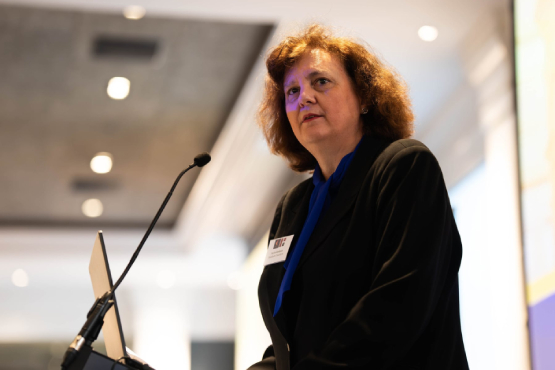
WiC was set up to showcase and share the very best of female talent, she went on, which was why she had invited Ms Rushton to be the keynote speaker.
Ambition management
The KC began by talking about female ambition, “because to someone like me that still feels like a bit of a dirty word”.
She added: “I’ve noticed a bit of a generational shift when it comes to being open about ambition, and I no longer feel as isolated as I did when I was younger because of that.”
Ms Rushton outlined how, when she began her career in 1993, she developed an “ambition management strategy” – this was about being ambitious but not openly displaying it.
She has employed deflection tactics throughout her career, downplaying her intentions – such as saying she might apply for silk “in due course” when she was already planning to do it – and framing her achievements as circumstantial rather than deliberately pursued, crediting luck or timing for her success.
She also developed “strategic independence”, operating under the assumption she would not receive help, an approach reinforced when she and two other female pupils were not taken on at their chambers, while only a male pupil who joined later was recruited.
This worked because “essentially I was able to progress without triggering too much of the backlash that I think visible female ambition often invites. And the independence meant that I wasn’t too vulnerable to withdrawal of any particular source of support”.
Ms Rushton reflected that she probably missed opportunities as a result. “And it probably also contributed to me seeming a bit too intimidating, as I’ve sometimes been told I can be.”
But there has been that generational shift among younger women, who were more openly ambitious, less apologetic about career advancement, and more comfortable asking for help and using social media for professional promotion.
As a result, “I was able to be a bit more open about my own ambitions when they named theirs. And that created some space for mutual recognition based on what you might call a shared drive rather than just a shared struggle”.
There remained structural barriers, of course – such as caring responsibilities and work allocation – while her approach to being underestimated “is that I treat it as a superpower rather than being offended by it”. Practical support from people outside the profession could help too.
Ms Rushton went on that, when appointed as a deputy judge and later head of chambers, she discovered her leadership style was “transformational”.
“It means articulating a vision. It means intellectually stimulating ways of change, challenging assumptions, encouraging creativity among the people that you’re leading and giving individual consideration to people’s individual needs, asking them what they need, helping them come up with creative solutions for improving the situation and also trying to model it…
“What younger women have taught me is that directness is increasingly possible and sometimes it can be more effective and that mutual support beats independence…
“You don’t have to choose between being ambitious and being connected – you can do both. Build hybrid approaches. Learn tactical deflections for hostile environments but be direct with each other as ambitious young women and older women, and also learn from us how to navigate some of the institutions that you’re having to deal with.”
Ms Rushton concluded that she wished she had learned earlier the power of collaborating: “Find the women in this room or in your workplace who are ambitious. Tell each other what you actually want. Help each other get there. And when you encounter the barriers, and they’re still out there, change them collectively.”
Showing what Costs Lawyers really do
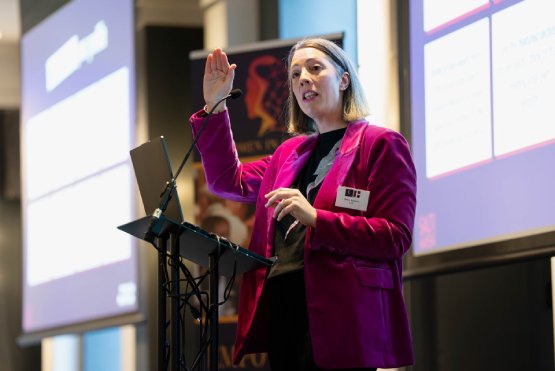
The next speaker was well-known legal marketing expert Helen Burness, founder of Saltmarsh Marketing, who outlined the benefits of being visible on LinkedIn and how to achieve it.
“Visibility isn’t vain, it’s about influence and impact,” she emphasised. “It’s about building trust with people who are going to give you work. It’s about future proofing your career.”
Ms Burness stressed that it was never too late to start – and dismissed fears like not feeling senior enough or not having enough time. Everyone has 10 minutes in their day to spare for this.
“When you are showing up online, when you are being visible, you don’t just speak for yourself. It’s not just about you. You are showing what Costs Lawyers really do. I’ve worked in legal marketing for 25 years… but I don’t really understand what [costs law] is and I’d love someone to explain that to me properly. You can really bring that to life. This is a really important part of the work of the legal sector. You can challenge outdated assumptions about your role…
“Costs law might seem a bit dry, a bit technical, but clearly the people that are leading it are not. So you can challenge those outdated assumptions.”
It also helped existing clients “remember how good you are” and potential clients “see how good you are and potentially get in touch”, while connecting with colleagues and leaders. LinkedIn offered “an incredibly supportive community” as well.
Helen will be writing for us shortly about how to optimise your LinkedIn experience.
Empowerment through technology
It was then time to hear from this year’s Rising Star, Lauren Evans, a trainee Costs Lawyer at Kent firm Furley Page. She was introduced by last year’s winner, Billie Spooner, who spoke about her progress since, speaking on other platforms and achieving promotion to associate costs technical specialist and advocate at Irwin Mitchell. The Rising Star award, she said, was “about potential, about grit and about showing up”.
Ms Evans chose as her topic ‘Empowerment through technology – owning the digital shift’, arguing that representation mattered – given only around one in four workers in tech were women – and that women must actively shape the technology they use, rather than being passive consumers.
Studies showed that women were five times less likely to talk about their accomplishment than men, possibly out of modesty or not wanting to be seen as boasting. “Sharing our work isn’t bragging, it’s participating. It’s how we make our work visible. And if we want to influence how technology develops in our profession, then we have to be seen and heard.”
Technology could be a tool for flexibility, efficiency, networking and learning – it was particularly valuable for women with caring responsibilities. “Whilst technology doesn’t replace our expertise, it can take care of the drudgery so that we can focus on those parts of our work that require judgment, experience and creativity.”
She explained how, from her own experience in learning Excel, building digital confidence was a gradual process. “if you feel that you are not a tech person, that’s okay – it just means that you haven’t had enough practice yet.” It was a learnable skill, achieved through small, incremental steps and practice. “So click the button, try that new software and even break it. You’ll learn how to fix it. Each time you try, your knowledge grows and your fear shrinks.”
After detailing a couple of Excel ‘tricks’ that she had learned, Ms Evans highlighted that building this competence “is not just a personal bonus but is actually part of our professional responsibilities”. She explained: “Our regulatory bodies make it clear that we have a duty to stay competent. Today that competence includes technology.”
She pointed to principle four of the Costs Lawyer Standards Board’s code of conduct: provide a good quality of work and service to your client. “This means understanding and using the right technology to do the job efficiently. If you ignore the tech tools that everybody else is using, then you can risk that standard.”
At the same time, being confident with technology did not mean knowing everything or never making mistakes. It was about attitude, not perfection: “It’s about being willing to learn what you need to learn…
“Confidence in technology is really confidence in ourselves. So it’s saying, I belong in every aspect of this profession, including technical parts that underpin it, and that by taking even small steps to improve our tech skills – maybe mastering a new feature of Excel or volunteering to test some new software at your firm, or maybe as simple as joining an online forum or a costs group – we aren’t just boosting our own careers, but we’re helping shape the future of costs law.
“By doing these things, that’s how we truly take back tech and ensure that our voices are in the room, not as tokens or afterthoughts, but as architects of change. When we take control of technology, we really are taking control of our future.”
Learning from mistakes
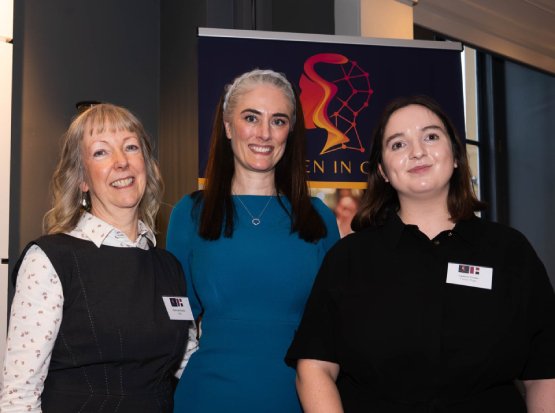
The final session saw Ms Bedford interview Debbie Burke, a dual-qualified Costs Lawyer and solicitor who is a managing associate at Practico. A former ACL Council member who led its work on the development of the J-codes and electronic bill, she is also a former chair of the Law Society’s civil litigation section committee and is a member of its civil justice section committee.
She started off as a solicitor but moved into costs at Kain Knight after having a baby, and then ran her own practice for many years before joining Practico in 2016. She has also become a road user charging adjudicator.
Ms Burke said she had realised the skills learned as a lawyer – “we take information, we assimilate it quickly, we digest it, we communicate it, we make decisions” – were transferable to any kind of environment.
She described the most useful skill as the ability to make a ‘good enough decision’ based on the information available at the time, rather than getting paralysed by the search for a perfect answer.
A core theme was the importance of learning from mistakes and failures, which Ms Burke viewed as humanising and essential for growth. She shared a story of her horror at being placed on an improvement plan as a new adjudicator but how she actually grew from the experience. “It reminded me that things aren’t always easy just because you’ve done something for a long time.”
She had learned a lot too from sitting on committees with law firms leaders and others, although it had taken some time to find her voice. “I remember going to early ACL council meetings and not saying anything because there were people who knew so much, but stick it out, listen, learn and just try little bits. And if it doesn’t work, then think, what could I done differently? How might I approach it next time? It really is a case of building 10,000 flying hours.” Never be afraid to try and fail, she advised.
Ms Burke reflected how the standing of costs professionals has grown – when she started working in the field, “we were still coming out the end of the managing clerk role, so it was much less professional, much less regulated. We had nothing really that showed our competence and our qualification. Whereas I sit here now and am amazed to see so many women in costs thriving”.
The next step, she said, was to open up judicial appointments to Costs Lawyers, a campaign being pursued by the ACL and Costs Lawyer Standards Board.
Making an impact
The event finished with Ms Bedford handing out the inaugural Woman of Impact Award, which is dedicated to the memory of Gemma McGungle, the barrister who passed away last year at the age of 38.
She passed on a message from the chair of the judging panel, Senior Costs Judge Jason Rowley, who described the entries for the award as “truly inspiring” and how they “demonstrate that leadership of all shapes and sizes can be found around the country. The importance of role models to encourage others can hardly be overstated”.
The winner was Ashliegh Beaver, an associate partner at defendant firm HF. Also nominated were Rebecca Mogford, head of Court of Protection costs at RC Legal Solutions, and Sally Sargesson, a senior associate at Irwin Mitchell.
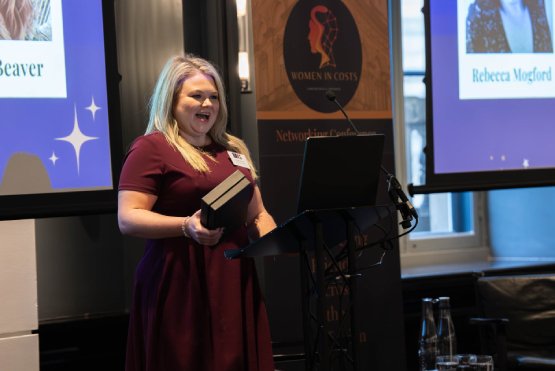
Ms Bedford said: “All of these women exemplified the core Women in Costs values of supporting and empowering others. They showed authentic leadership and have had an immeasurable impact on everyone who they’ve met. They’ve lifted others up, they’ve created space, and they’ve created opportunities for other women in their environments. But they’ve also created meaningful change and have led by example throughout.”
She called Ms Beaver “one of the most gracious s people I have ever met”. She continued: “Her professional mission was highly ambitious – to transform her department into a leading light in the costs world, whilst also changing the culture at her firm to ensure that it was happy, inclusive and supportive. That is a line that is not so easily traversed.
“But [she] has done so with grace, empathy, and kindness. She’s loved by absolutely everybody she meets. She builds strong, supportive relationships, both internally and externally. The wellbeing of her team is utterly paramount. She has a strong, ethical and moral compass, and with one of the testimonies saying that she was the angel on her shoulder.
“She leads operationally, but also humanely. She balances metrics and emotion, and she puts empathetic leadership at the heart of everything she does. Ashliegh, congratulations.”